
Skiing, while often perceived as a gravity-assisted descent, remains one of the most physically demanding recreational and competitive sports, requiring a specialized physiological profile that balances explosive strength with sustained aerobic and anaerobic capacity. As the 2025-2026 winter season approaches, professional trainers and sports scientists are increasingly emphasizing the concept of "power endurance" as the critical factor in both performance optimization and injury prevention. This training philosophy, championed by elite coaches such as Chris Miller, focuses on preparing the musculoskeletal system to handle the eccentric loading and high-frequency vibrations inherent in alpine sports. By shifting the focus from raw muscle mass to the ability to sustain high-intensity efforts over long durations, skiers can ensure they maintain technical precision from the first chair to the final run of the day.
The Physiological Demands of Modern Alpine Skiing
The evolution of ski technology, particularly the development of modern carving skis with aggressive sidecuts, has fundamentally altered the physical requirements of the sport. To effectively engage a ski’s edge on firm "corduroy" snow, a skier must exert significant lateral force while maintaining a stable core. Research into alpine skiing biomechanics indicates that during high-speed carving turns, athletes can experience centrifugal forces equivalent to two to three times their body weight. These forces must be absorbed primarily by the quadriceps, glutes, and core musculature.
Power endurance is defined as the capacity to perform repeated explosive movements under conditions of increasing muscular fatigue. In a skiing context, this translates to the ability to execute hundreds of high-pressure turns during a single descent without a degradation in form. When power endurance fails, the body’s "kinetic chain" breaks down; the hips may drop back, the core may collapse, and the knees may take the brunt of the impact, significantly increasing the risk of anterior cruciate ligament (ACL) tears—the most common serious injury in the sport.
The Chris Miller Methodology: From Elite Racing to Recreational Excellence
Coach Chris Miller, a veteran in the field of high-performance ski conditioning, has spent years refining training protocols for world-class ski racers. His approach acknowledges that while a recreational skier may not need the same absolute strength as an Olympic downhill racer, the fundamental movement patterns remain identical. Miller’s 2025 program focuses on "functional durability," a state where the body is conditioned to react instinctively to variable terrain, such as moguls, ice, and heavy powder.
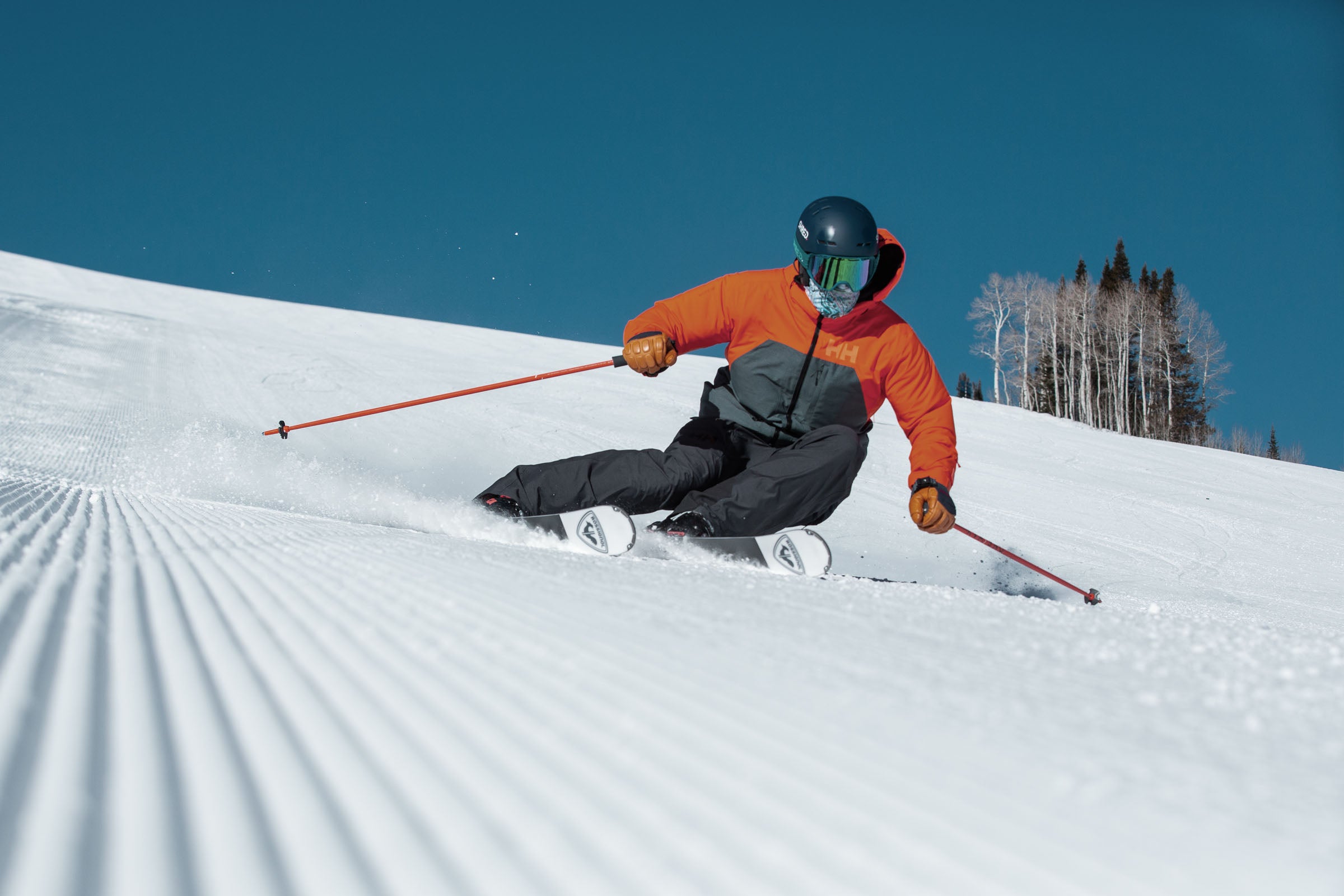
According to industry data from the National Ski Areas Association (NSAA), a significant portion of on-mountain injuries occur after 2:00 PM, a timeframe that correlates directly with the onset of physical and mental fatigue. Miller’s training intervention aims to push this "fatigue threshold" further back, allowing skiers to remain in control even when their energy reserves are low. This is achieved through a combination of plyometric circuits, isometric holds, and "anti-movement" core stability exercises.
Strategic Chronology of Pre-Season Conditioning
For maximum efficacy, sports physiologists recommend a structured 12-week lead-up to the ski season. This timeline is typically divided into three distinct phases:
- Phase I: Hypertrophy and Base Strength (Weeks 1-4): Focuses on building muscle volume and strengthening connective tissues through traditional weightlifting (squats, deadlifts, and lunges).
- Phase II: Power Development (Weeks 5-8): Introduces explosive movements, such as box jumps and weighted cleans, to increase the rate of force development.
- Phase III: Power Endurance and Sport-Specific Conditioning (Weeks 9-12): The final phase, which the current workout program represents, emphasizes high-repetition explosive work with minimal rest to simulate the duration of a long ski run.
Detailed Power Endurance Workout Structure
The following workout is designed to be performed two to three times per week, allowing for 48 hours of recovery between sessions to ensure neuromuscular adaptation.
The Power Circuit Warm-Up: Quadruped and Lunge Series
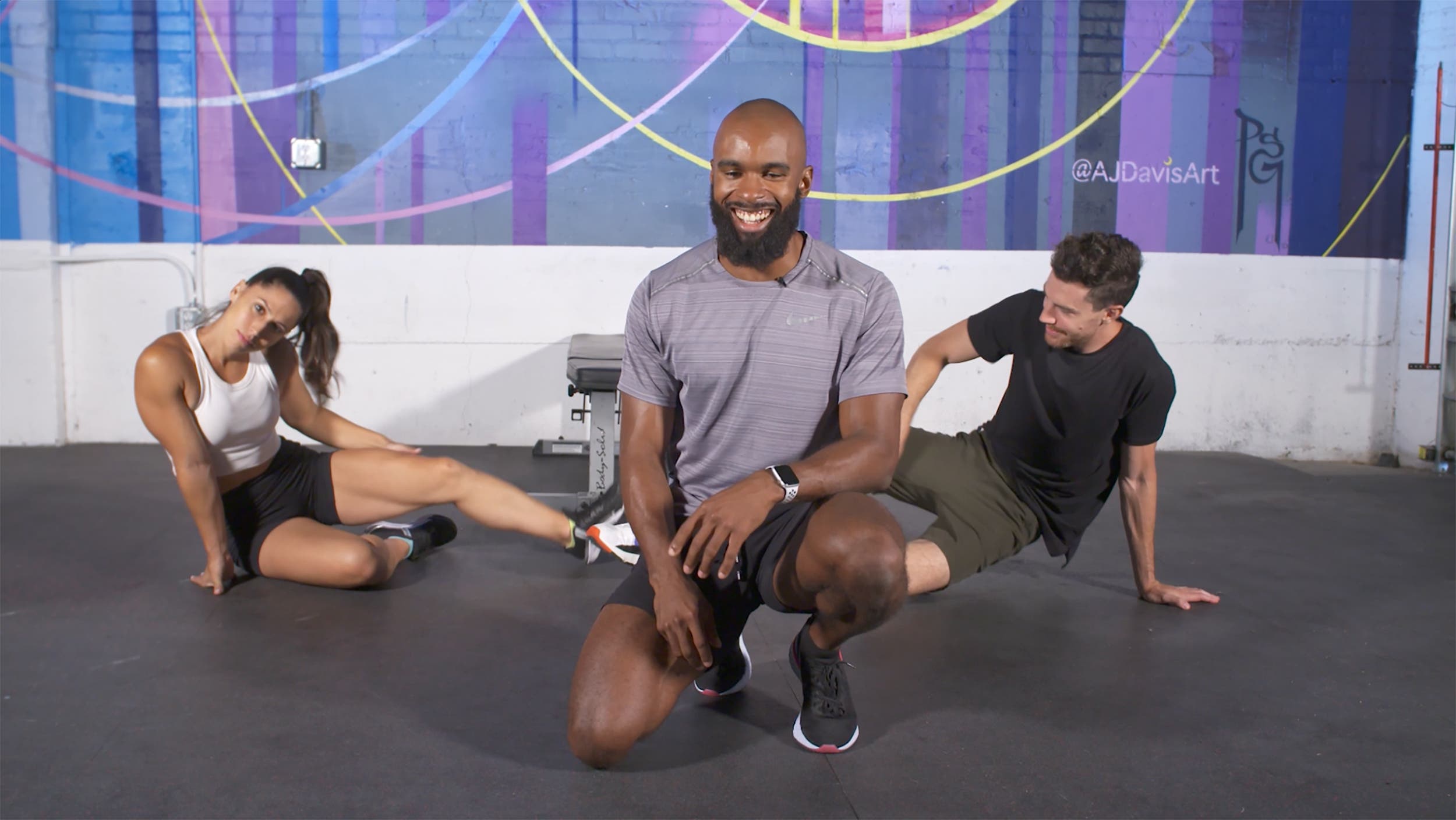
The warm-up phase is critical for "waking up" the central nervous system and lubricating the joints. The Quadruped Series focuses on multi-planar stability, ensuring the hips and shoulders are synchronized.
- Quadruped Bird-Dog (6 reps per side): Focuses on contra-lateral stability, engaging the posterior chain and the deep stabilizers of the spine.
- Quadruped Hip Circles (6 reps per side): Increases synovial fluid in the hip joint, essential for the deep flexion required in short-radius turns.
- Lunge with Rotational Reach (2 reps per side): This movement mimics the separation between the upper and lower body that is vital for maintaining a downhill-facing torso while the legs navigate the fall line.
- Dynamic Skater Hops (6 reps per side): A low-intensity plyometric move that prepares the adductors and abductors for the lateral stresses of carving.
Power Circuit No. 1: Lower Body and Explosive Capacity
This circuit utilizes a sandbag to provide "unstable resistance," which more closely mimics the shifting weight of a skier in variable snow conditions.
- Sandbag Front Squats (12 reps): Places the load on the anterior chain, forcing the core to stay upright, much like the stance required in a steep couloir.
- Sandbag Rotational Lunges (10 reps per side): Challenges the skier’s balance and forces the stabilizer muscles in the ankles and knees to work in unison.
- Lateral Sandbag Toss (10 reps): Develops explosive power in the frontal plane, which is essential for rapid edge-to-edge transitions.
- Plyometric Split Jumps (30 seconds): A high-intensity finisher for the set that drives the heart rate into the anaerobic zone.
Protocol: Perform four sets with no rest between individual exercises. Rest for 45 seconds between full sets to allow for partial ATP (adenosine triphosphate) recovery.
Power Circuit No. 2: Trunk and Anti-Movement Stability
In skiing, the "trunk" (the region between the mid-thigh and mid-chest) acts as the transmission for the power generated by the legs. If the trunk is weak, power is lost, and the skier loses balance.
- Dead Bug with Resistance (15 reps per side): This exercise teaches the athlete to move their limbs while keeping the lower back pinned to the floor, protecting the lumbar spine during high-impact landings.
- Pallof Press (12 reps per side): An "anti-rotation" movement where the athlete resists a cable or band pulling them sideways, simulating the forces felt when a ski hooks up unexpectedly.
- Plank with Alternating Leg Lifts (45 seconds): Builds endurance in the transverse abdominis and gluteus medius.
Protocol: Perform three sets with 45 to 60 seconds of rest between sets.
Supporting Data: The Correlation Between Fitness and Safety
A 2024 study published in the Journal of Sports Science and Medicine analyzed the impact of pre-season conditioning on injury rates among recreational skiers. The data revealed that participants who engaged in a minimum of six weeks of targeted power endurance training experienced a 34% lower rate of non-contact knee injuries compared to the control group. Furthermore, the trained group reported a 22% increase in "vertical feet skied per day," suggesting that improved fitness directly translates to a higher volume of activity and greater overall satisfaction with the resort experience.
The energy expenditure of alpine skiing is also significant. An intermediate skier can burn between 400 and 600 calories per hour, while an expert charging hard in the moguls can exceed 800 calories per hour. Without adequate power endurance, the body’s glycogen stores are depleted rapidly, leading to the "shaky leg" syndrome that often precedes a fall.

Expert Insights and Industry Implications
Professional ski patrollers and mountain safety advocates have lauded the shift toward functional fitness. "We see a distinct pattern every season," says Thomas Mueller, a veteran mountain safety officer. "The skiers who have spent time in the gym doing lateral work and core stability are the ones who can navigate a surprise ice patch without ending up in a sled. Fitness is the best safety gear you can’t buy at a retail shop."
Furthermore, the ski equipment industry is responding to this trend. Brands like Rossignol and Head are designing higher-performance "all-mountain" skis that require more input from the skier. As equipment becomes more capable, the physical "entry fee" to pilot that equipment safely increases. This creates a symbiotic relationship between the fitness industry and the ski industry, where physical preparation is seen as an essential component of the gear kit, alongside boots, skis, and helmets.
Conclusion: The Path to a Successful Season
The transition from the gym to the mountain is the ultimate test of a power endurance program. By focusing on the specific movements outlined by Coach Chris Miller—prioritizing stability, lateral power, and trunk strength—skiers can transform their winter experience. The goal of this training is not merely to look better in a base layer, but to build a body that is resilient, reactive, and capable of handling the majestic but unforgiving environment of the high mountains. As the first snow begins to fall, the work done in the off-season will determine whether a skier merely survives the winter or truly masters it.

