
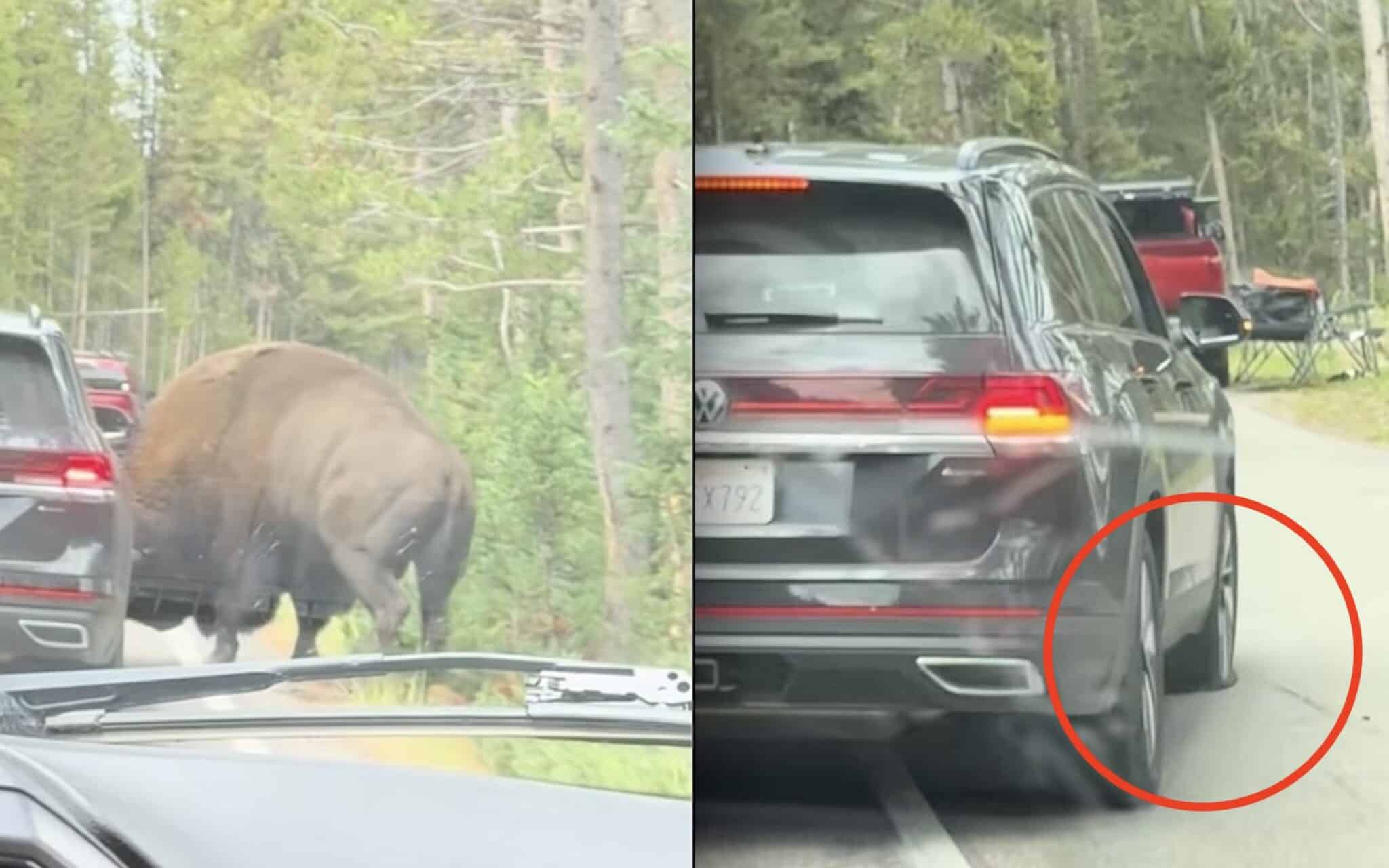
A recent viral video emerging from the vast landscapes of Yellowstone National Park has captured the raw power of North America’s largest land mammal, as a large bison directly impacted a vehicle, puncturing its tire. This dramatic incident, caught on camera, serves as a stark and timely reminder for visitors of the critical importance of maintaining a safe distance from Yellowstone’s iconic bison population, especially as the park enters its peak season for wildlife viewing and the bison rut.
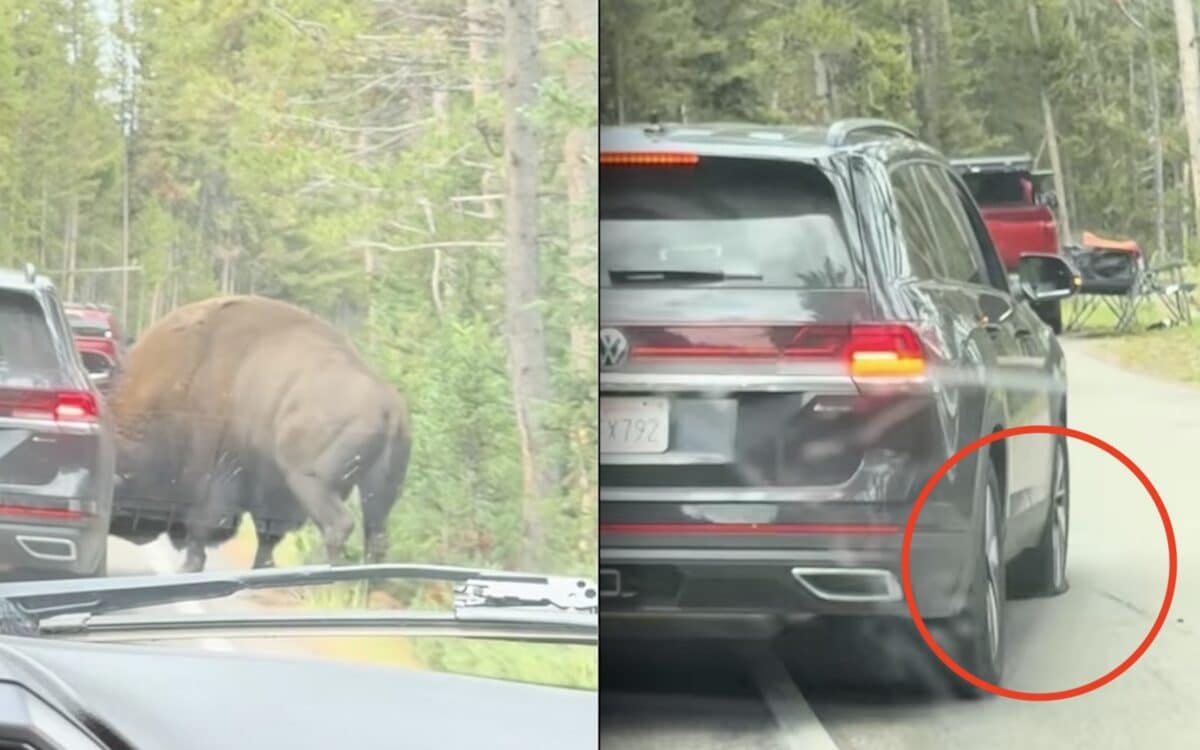
The footage depicts a bison, likely a mature bull given its imposing size, making contact with a car as it passed by. While the specific date and precise location within the park are not detailed in the initial reports, the visual evidence is undeniable: the bison’s force was sufficient to damage the vehicle’s tire, rendering it inoperable and necessitating a stop. This event underscores the unpredictable nature of wildlife encounters, even when visitors are attempting to observe from a distance.
Yellowstone National Park is home to a significant and thriving bison population, estimated to be around 5,300 individuals in 2025, distributed across two primary breeding herds. This robust presence ensures that bison are frequently observed by park visitors, often along roadways, which can lead to traffic congestion known as "bison jams." While the opportunity to witness these magnificent creatures in their natural habitat is a primary draw for many, it also presents inherent risks if proper safety protocols are not strictly adhered to. Bison, despite their often placid appearance, are wild animals with immense strength and unpredictable temperaments. Bulls can weigh up to 2,000 pounds, while cows typically reach up to 1,000 pounds. Their formidable horns, present in both sexes, further emphasize their potential for danger.
Adding a layer of complexity to this particular encounter is the timing. The incident occurred during what is officially recognized as the bison rut, the mating season for these animals, which typically spans from late July through August. During this period, male bison, or bulls, are known to become more territorial, aggressive, and easily agitated as they compete for mates. This heightened state of arousal can increase the likelihood of defensive or assertive behaviors towards perceived intrusions, such as passing vehicles. The bison in the video, if indeed a bull, was likely exhibiting behaviors consistent with the rutting season, making the interaction potentially more volatile.
A Close Call: The Incident Unfolds
While a precise timeline of the event is unavailable, the video suggests a vehicle was in the process of navigating past the bison when the animal initiated contact. Reports indicate the vehicle was moving slowly, a common practice when encountering bison on the road. However, the incident highlights that even slow passage can be perceived as a threat or an encroachment by a wild animal, particularly during its breeding season. The resulting puncture of the tire immediately stranded the vehicle, requiring assistance and reinforcing the need for preparedness when traveling through remote areas with wildlife.
Park officials, when alerted to such incidents, typically investigate to gather more information about the circumstances. While direct statements from the individuals involved in this specific event have not been publicly released, the broader message from Yellowstone National Park authorities remains consistent: prioritizing safety and respecting wildlife boundaries is paramount.
Understanding Bison Behavior and Risk
Yellowstone’s bison are not merely picturesque inhabitants; they are powerful creatures whose interactions with humans have historically resulted in injuries. The park’s comprehensive safety guidelines are designed to mitigate these risks by educating visitors on appropriate conduct. The incident serves as a tangible illustration of why these guidelines are so crucial. A bison’s charge can reach speeds significantly faster than a human can run, making evasion difficult if an encounter escalates.
The park mandates a minimum distance of 25 yards (approximately 23 meters) between people and bison. This buffer zone is considered essential for allowing the animals to move freely without feeling threatened and for providing visitors with a margin of safety. The advice to turn around and go the other way if a bison approaches within this distance is not merely a suggestion but a vital safety measure.
Official Response and Safety Mandates
In the wake of such events, Yellowstone National Park officials reiterate their commitment to visitor and wildlife safety. While specific operational details regarding the immediate aftermath of this tire-puncturing incident are not publicly available, the park’s established protocols are designed to address such situations. These often involve ensuring the safety of stranded visitors, assessing any potential harm to the animal, and reinforcing safety messaging through park channels.
The park’s published bison safety guidelines offer a clear framework for visitor conduct:
- Maintain Distance: Always stay at least 25 yards (23 meters) away from bison. Never attempt to approach them for photographs or any other reason. If a bison enters your designated safety zone, retreat.
- Recognize Warning Signs: Bison may exhibit warning behaviors such as bluff charging, head bobbing, pawing the ground, bellowing, or raising their tails. These are clear indicators that you are too close and a charge is imminent.
- Immediate Evasion: If a bison charges, do not stand your ground. Immediately walk or run away from the animal. If it continues to pursue, deploy bear spray while moving away and seek cover behind sturdy natural features like trees or large rocks, or behind a vehicle if available.
- Drive with Caution: When encountering bison on the road, reduce speed and exercise extreme patience. Wait for the animals to clear the roadway. Honking the horn or driving aggressively towards them is strongly discouraged and can provoke a dangerous reaction. Always be particularly attentive when driving at night or in low visibility conditions, as the dark color of bison can make them difficult to spot.
Broader Implications for Wildlife Tourism
Incidents like the one involving the punctured tire have broader implications for the practice of wildlife tourism. They highlight the delicate balance between allowing the public to experience natural wonders and ensuring the preservation of both human and animal safety. The viral nature of such videos can serve a dual purpose: it can educate a wider audience about the potential dangers of underestimating wildlife, while also underscoring the need for stricter enforcement of safety regulations and visitor education initiatives.
The economic and ecological significance of Yellowstone National Park, and its wildlife, cannot be overstated. The park draws millions of visitors annually, contributing significantly to local economies. However, this influx of tourism must be managed responsibly. The long-term health of the bison population and the integrity of the park’s ecosystem depend on visitors understanding and respecting the wild nature of the animals that inhabit it.
This recent encounter serves as a potent reminder that while Yellowstone offers unparalleled opportunities for wildlife observation, it is a wild place. The power and unpredictability of its inhabitants, like the bison, demand constant vigilance and adherence to safety guidelines. As the park continues to welcome visitors, reinforcing these messages and ensuring that educational materials are readily accessible will be crucial in preventing future incidents and fostering a sustainable relationship between humans and wildlife. The goal remains for visitors to leave with memories of awe-inspiring encounters, not of dangerous confrontations.

