
For five decades, the United States Environmental Protection Agency (EPA) operated under a bipartisan consensus that the protection of public health—specifically regarding air and water quality—transcended political ideology. This foundational agreement, established in the wake of the 1970 Clean Air Act and subsequent environmental legislation, has faced unprecedented strain in recent years. On September 16, a coalition of lawmakers, led by Representative Sean Casten and Senator Sheldon Whitehouse, introduced the Environmental Health Restoration Act (EHRA). This legislative initiative seeks to codify the agency’s original mission, effectively insulating it from the regulatory volatility that has characterized the last several years of federal environmental policy.

The Erosion of Regulatory Authority
The introduction of the EHRA follows a period marked by significant federal rollbacks of environmental safeguards. Since 2020, various executive actions and legal interpretations have narrowed the scope of the EPA’s authority under the Clean Air Act and the Clean Water Act. These shifts have specifically targeted rules governing industrial emissions, the definition of "waters of the United States," and the agency’s capacity to regulate greenhouse gases.
Legal analysts point to the Supreme Court’s decision in West Virginia v. EPA (2022) as a turning point that significantly constrained the agency’s ability to regulate power plant emissions through "generation shifting." This ruling, combined with administrative directives that prioritized industrial deregulation, led to a measurable decline in the enforcement of environmental standards. According to data from the Environmental Integrity Project, civil penalties for pollution violations dropped by approximately 40% between 2017 and 2021, suggesting a systemic shift away from aggressive regulatory oversight.
Anatomy of the Environmental Health Restoration Act
The EHRA is designed to function as a legislative "reset." By formally reasserting the EPA’s broad authority, the bill aims to prevent the executive branch from unilaterally dismantling science-based protections. The core provisions of the act include:
- Codification of Scientific Standards: The bill mandates that all regulatory decisions must be based on peer-reviewed, publicly available scientific data, preventing the exclusion of studies that conflict with political agendas.
- Enforcement Durability: It establishes clear, non-discretionary duties for the EPA to monitor and regulate pollutants that threaten public health, making it more difficult for administrations to "pause" enforcement mechanisms.
- Interagency Resilience: The act creates a framework for inter-departmental cooperation, ensuring that agencies like the Department of the Interior and the EPA maintain synchronized standards for public land management and water quality.
Proponents argue that by enshrining these requirements in statute, the EHRA mitigates the "pendulum effect," where environmental regulations swing wildly from one administration to the next. This stability is viewed as essential for private industry, which requires long-term regulatory certainty to plan capital investments in green technology and infrastructure.

The Human and Economic Cost of Pollution
The impetus for the EHRA extends beyond abstract policy; it is rooted in the tangible impact of environmental degradation on American communities. Pollutants do not adhere to jurisdictional boundaries. The rise in wildfire frequency, largely attributed to climate-driven drought, has resulted in massive spikes in particulate matter (PM2.5) across the Western United States. According to the American Lung Association’s "State of the Air" reports, nearly 40% of Americans now live in counties with failing air quality grades, a statistic that correlates directly with increased hospitalizations for respiratory and cardiovascular conditions.
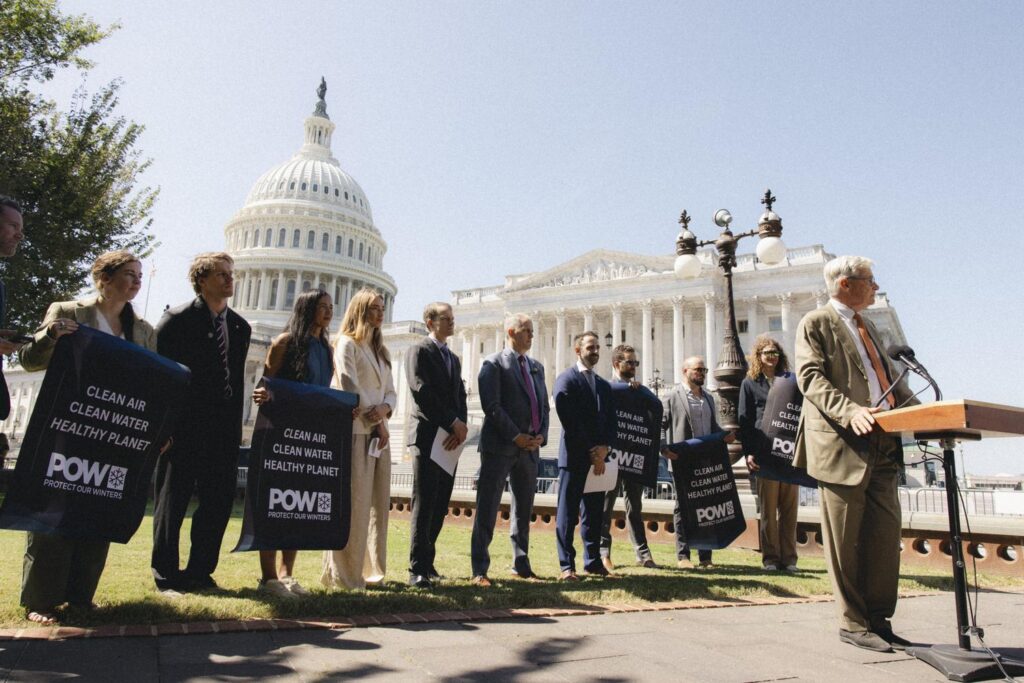
The outdoor recreation industry, which contributes an estimated $862 billion annually to the U.S. GDP, has become a vocal advocate for the bill. Organizations such as Protect Our Winters (POW) have highlighted how shortened winter seasons, degraded water quality, and volatile weather patterns threaten the economic viability of tourism-dependent regions. During the September 16 introduction of the EHRA, coalition representatives emphasized that environmental health is an economic imperative. The loss of snowpack, for example, directly affects agriculture and hydroelectric power generation, creating a ripple effect that extends far beyond the mountain towns that serve as the industry’s hub.
Perspectives from the Capitol
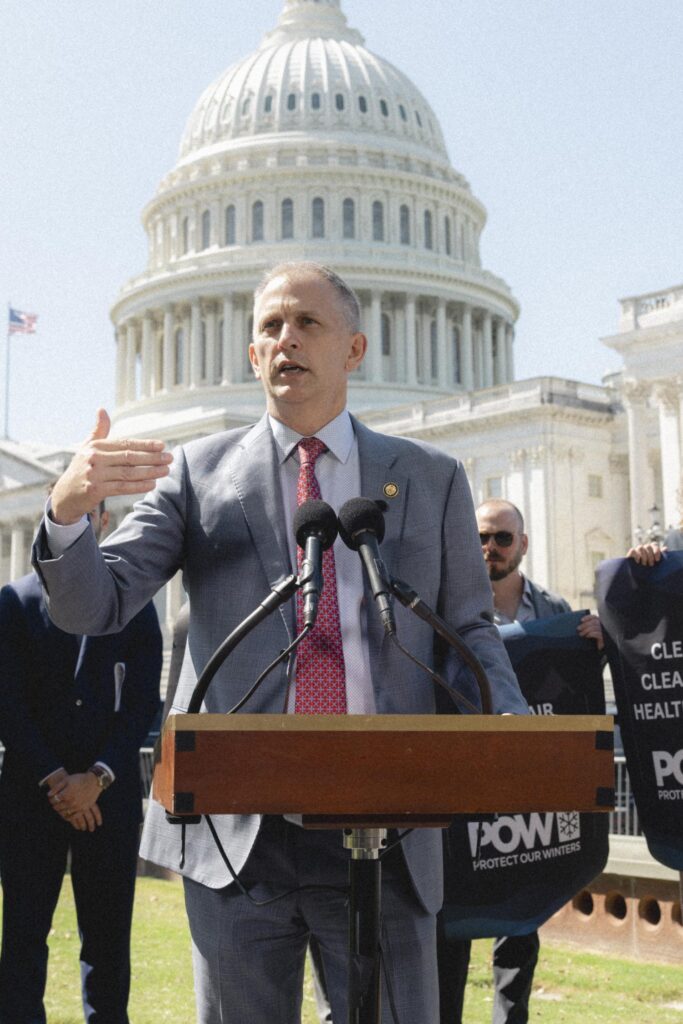
The legislative rollout in Washington, D.C., saw a diverse coalition of advocacy groups, including the League of Conservation Voters, the Natural Resources Defense Council, and the Surfrider Foundation, backing the bill. Senator Sheldon Whitehouse, a long-time advocate for climate-conscious legislation, characterized the EHRA as a necessary intervention. "The EPA has, in recent years, been redirected from its duty to protect public health toward a role that serves the interests of major political donors," Whitehouse stated during the press event. "This bill is the first step in restoring the integrity of the scientists and the science that must guide our national policy."
However, the bill faces a challenging path. While the introduction of the EHRA signals a growing urgency among lawmakers, the current partisan divide in Congress makes immediate passage unlikely. Political strategists note that the bill serves as a "marker" legislation—a tool used to build public awareness, organize grassroots support, and establish a policy platform for future congressional sessions.

Long-Term Strategic Outlook
The proponents of the EHRA are engaged in what they describe as "the long game." By engaging in a bipartisan outreach strategy, they have initiated conversations with offices across the political spectrum, including members who have historically been skeptical of expanded federal regulatory power. The objective is to frame environmental protection not as a political victory, but as a public utility—similar to public safety or infrastructure maintenance.
The timeline for the EHRA’s advancement is tethered to the broader electoral cycle. Advocates acknowledge that the legislative window for significant environmental reform may not fully open until the 120th Congress. Until then, the coalition plans to focus on three specific pillars:
- Public Education: Quantifying the health and economic risks of regulatory rollbacks to broaden the base of support beyond environmentalists.
- Coalition Expansion: Incorporating voices from the agriculture, hunting, and fishing sectors, who have a vested interest in land and water conservation.
- Data Synthesis: Creating a robust, accessible record of how the current EPA’s lack of enforcement has specifically harmed local economies.
Implications for the Future of Governance
The Environmental Health Restoration Act represents a significant challenge to the concept of the "unitary executive," which has been used to justify the rapid dismantling of agency regulations. If passed, the EHRA would signify a shift toward a more legislative-heavy model of environmental oversight, where the specific standards and mandates are set by Congress rather than left to the discretion of political appointees.
This transition, while potentially slow, could provide the regulatory stability necessary to address long-term threats like climate change and water scarcity. By tethering the EPA’s mandate to objective scientific requirements, the EHRA seeks to ensure that the air and water quality protections of the 21st century are as durable and foundational as those that defined the 20th century. As the bill moves into its next phase, the focus will remain on whether this coalition can translate its legislative proposal into a national priority that transcends the cycle of political transition.

